


Refrigeration can account for 60–70% of a cold warehouse’s total electricity consumption, making energy one of your largest operating costs after labour. Understanding where energy is used and where it is lost is the first step toward reducing it. This guide helps cold-store operators and automated pallet storage integrator partners assess energy use and build a measured baseline for action.
Why Equipment Electricity and Whole-Facility Energy Use Are Different
Equipment electricity covers compressors, evaporators, fans, conveyors and lighting. Whole-facility energy use adds heating fuel, forklift diesel, embedded energy in building materials and distribution losses. Separating these categories matters because a change that reduces compressor load may increase conveyor electricity if door-open times shift.
Sub-metering individual systems gives you the data to trace cause and effect. The GCCA Energy Excellence Recognition Program recommends this approach to help operators track performance over time.
Key Areas That Influence Cold Warehouse Energy Use
Refrigeration Systems
Compressors, condensers and evaporators form the largest single energy consumer in most cold stores. Set-points, defrost schedules, refrigerant charge and condenser cleanliness all affect consumption. Regular sensor calibration prevents compressors from running longer than necessary.
Building Insulation and Envelope Condition
Walls, roofs, floors and panel joints lose thermal resistance over time. Moisture ingress or degraded seals allow warm air into the cold zone, forcing refrigeration to compensate. A site assessment with thermal imaging can reveal hidden heat bridges before they escalate.
Door Openings and Airlock Design
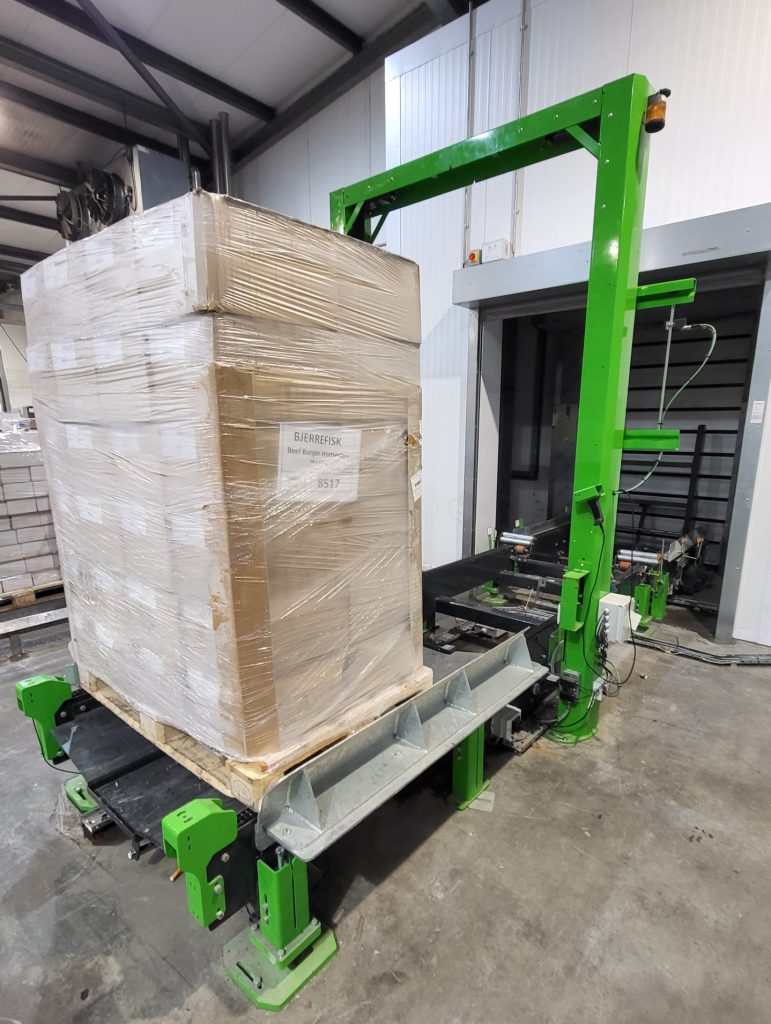
Every door opening between a cold zone and an ambient area allows warm air in and cold air out. In manual warehouses, forklift traffic can keep doors open for extended periods. High-speed interlocked doors or airlock chambers reduce this exchange. The Moffett Automation system operates with rapid envelope doors sized to the pallet being transferred, helping minimise cold air loss during automated movements.
Lighting
Every watt of lighting generates heat that the refrigeration system must remove. Automated storage zones can operate without lighting where no personnel access is required. Moffett Automation’s systems are designed to operate in complete darkness within automated cold-storage zones, removing lighting load entirely from those areas.
Pallet Flow and Storage Density
Unnecessary forklift travel generates heat, consumes battery or fuel energy and increases door-open frequency. Dense storage layouts reduce the refrigerated volume per pallet stored, lowering energy cost per pallet. Moffett Automation’s integrated system combines software intelligence with engineered automation to coordinate pallet routing and storage allocation through its Warehouse Control System (WCS).
Automation and Material-Handling Equipment
Automated pallet shuttles change how and where energy is consumed, but they do not inherently reduce total energy. Their contribution depends on operating conditions, storage density gains and the resulting reduction in door-open time and internal heat generation. Savings require a measured baseline and careful comparison of operating data.
The Moffett Automation Taxi, a lightweight multi-directional pallet shuttle weighing under 350 kg, uses regenerative braking and lithium battery power. Eco Traffic software intelligence routing directs idle shuttles to the nearest charging station and reduces unnecessary travel.
Cold Warehouse Energy Assessment Checklist
Use this checklist to structure your facility review. Each item should be assessed against measured data where possible, not estimated.
- Refrigeration baseline: Record compressor run-hours, pressures, defrost frequency and condenser cleanliness. Sub-meter refrigeration separately.
- Building envelope: Inspect roof, walls, floors and panel joints for moisture ingress, damaged seals and thermal bridging.
- Door performance: Log door-open times per shift. Record door type, speed and seal condition.
- Lighting audit: List luminaire types, wattages and hours per zone. Identify zones where lighting can be removed through automation.
- Pallet movement mapping: Track forklift or shuttle movements per shift, including empty runs and queue times at dock doors.
- Storage density review: Calculate pallet positions per cubic metre against the building’s theoretical maximum.
- Equipment sub-metering: Verify sub-meters for refrigeration, lighting, conveyors and charging stations.
- Maintenance records: Review refrigerant leak history, sensor calibration logs and insulation repair records.
- Temperature verification: Confirm actual zone temperatures against set-points. Even 1°C above requirement reduces compressor energy.
- Integration and visibility: Assess whether your control system provides data to correlate operational changes with energy outcomes. Moffett Automation Performance Centre data analytics supports this through performance analysis and lifecycle support.
How to Establish a Measured Baseline
Record at least 12 months of energy consumption alongside throughput volumes, ambient temperature data and any operational changes. This baseline allows you to distinguish genuine efficiency gains from seasonal variation or changes in product mix.
Normalise your data by expressing energy use per pallet stored or per pallet movement, rather than as a raw total. The GCCA’s EERP programme uses a similar normalised approach, helping more than 200 participating facilities track improvements over time (Refrigerated & Frozen Foods, 2025).
Discuss Your Operational Requirements
Moffett Automation does not supply refrigeration equipment, and not every module or service is included in every project. Scope, responsibilities and expected outcomes are agreed around each facility’s operating conditions, whether delivered directly or through an integrator partner. If you are assessing energy use alongside an automation project, the 12-point warehouse automation checklist is a useful starting point for discussing your requirements with the team.
FAQs About Cold Warehouse Energy Assessment
What is the single largest energy consumer in a cold warehouse?
Refrigeration systems typically account for 60–70% of total electricity consumption in temperature-controlled warehouses. Compressor efficiency, defrost settings and condenser maintenance are the primary variables that influence this load.
Can automation alone reduce cold warehouse energy use?
Automation changes how and where energy is consumed, but it does not automatically reduce the total. Savings depend on storage density gains, lighting removal, reduced door-open times and coordinated pallet flow. A measured baseline before and after installation is essential to verify actual results.
How does Moffett Automation help with energy visibility in cold storage?
Moffett Automation’s mSuite software ecosystem includes Performance Centre analytics, which uses live and historical operational data to help teams identify throughput bottlenecks, equipment patterns and areas where energy-related improvements may be possible. Data Connect supports integration with existing business systems for a coordinated view.
