


High-Performance Cold Storage Automation at Liffey Meats
Key Figures at a glance:

| Location | Ireland |
| Operational Time | 12 hours per day, 6 days per week (inbound 12 hours per day) |
| Throughput IN | 10 pallets per hour |
| Throughput OUT | 30 pallets per hour |
| Pallet Shuttles | 3 Moffett Automation Taxi pallet shuttles |
| Building Height | 13.4 metres |
| VTUs | 1 Moffett Automation VTU |
| Inbound Locations | 1 |
| Outbound Locations | 1 |
| Specials Features | Inbound and outbound handling on level 2, with actuated rollers and drawbridges enabling controlled pallet movement through airlocks |
Project Overview
Moffett Automation delivered a bespoke cold storage AS/RS for Liffey Meats, designed to improve pallet handling efficiency, protect temperature integrity and maximise storage performance in a high-demand meat processing environment.
As production demand increased, Liffey Meats needed a scalable automated storage solution that could operate reliably in freezing conditions, maintain strict environmental control and improve pallet flow without expanding the warehouse footprint.
Challenges Presented
Responding to Growth in a Temperature-Controlled Environment
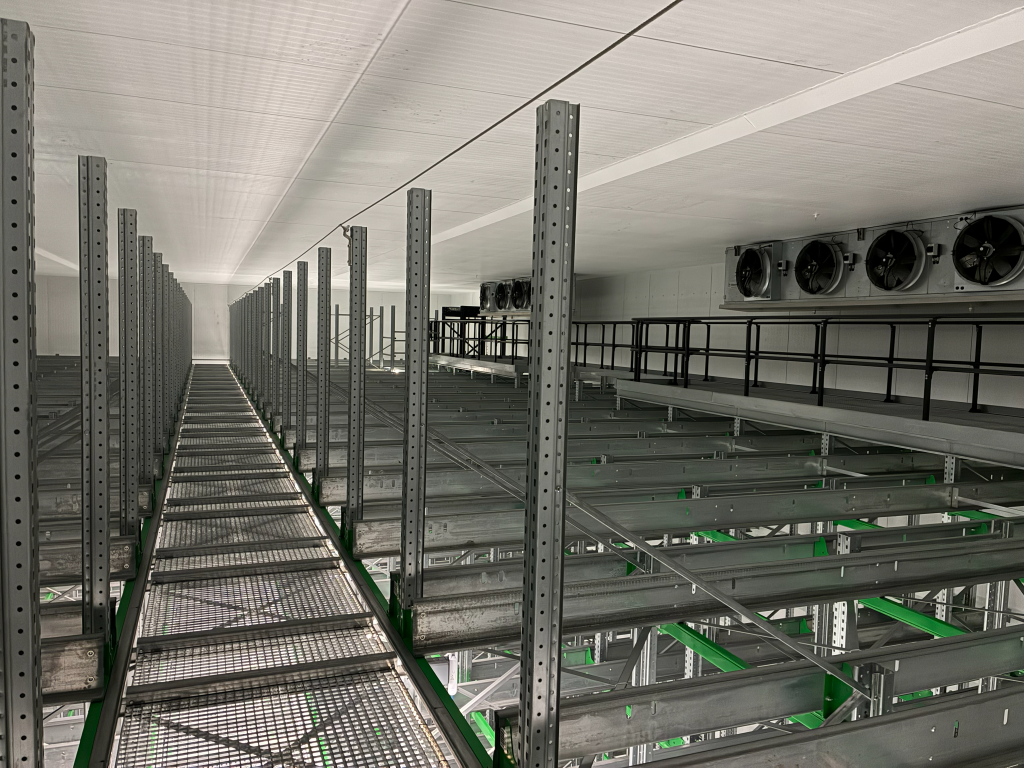
Liffey Meats needed to increase storage capacity and throughput within a temperature-controlled environment operating at -17°C. The system had to preserve cold-chain integrity, reduce energy loss, support growing production volumes and make better use of a constrained building footprint.
The project required a specialised automation solution capable of reliable operation in freezing conditions while maintaining safe, efficient and accurate pallet movement between inbound, storage and outbound areas.
Storage Transformed
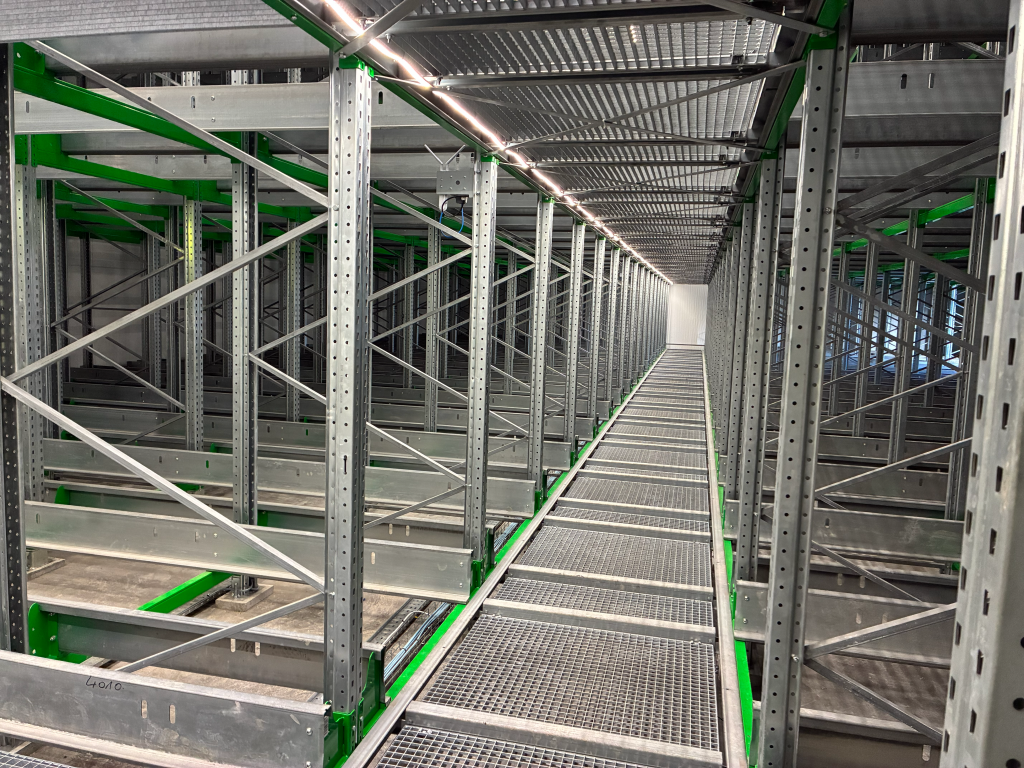
Moffett Automation designed and implemented a bespoke automated storage and retrieval system (AS/RS) engineered specifically for cold storage environments.
Moffett Automation designed and implemented a bespoke automated storage and retrieval system (AS/RS) engineered specifically for cold storage environments.
Key features of the system include:
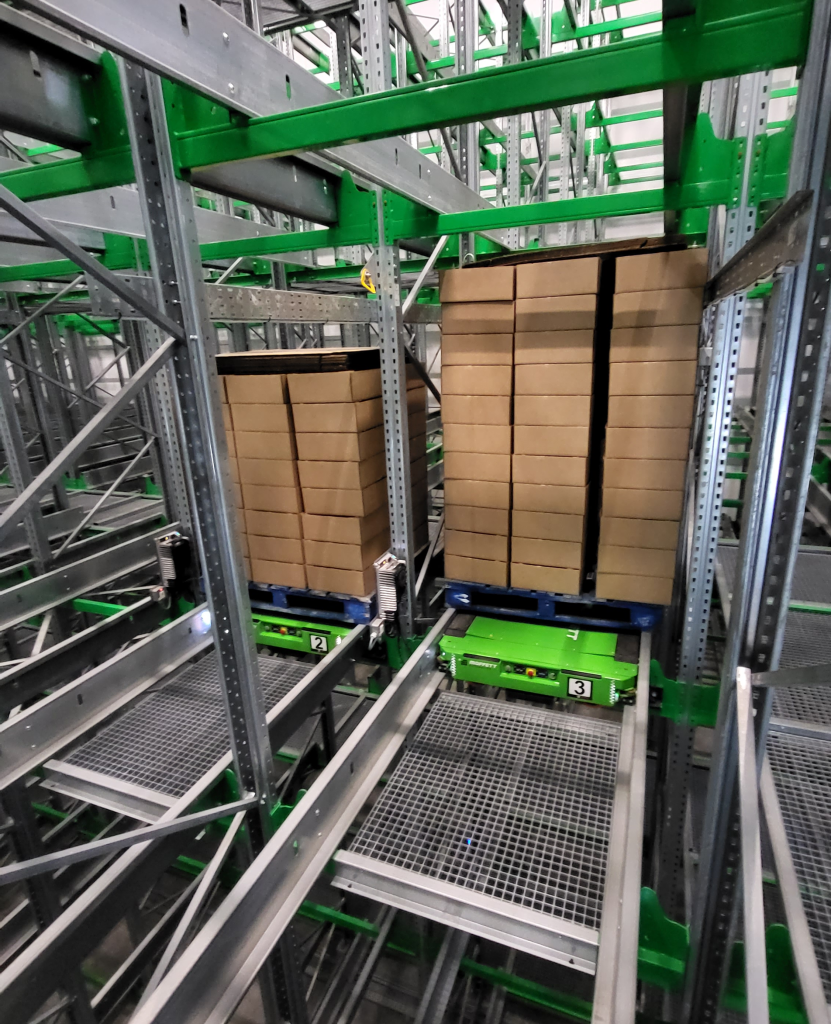
- 3 Moffett Automation Taxi pallet shuttles for efficient pallet movement
- 1 Moffett Automation VTU supporting multi-level storage operations
- Full integration with the Warehouse Management System (WMS) for real-time control and visibility
Automated airlock
A standout innovation within the system is the automated airlock infeed and outfeed process, designed to preserve temperature integrity and improve energy efficiency. The system uses actuated rollers and a drawbridge mechanism to move pallets through the airlock while limiting cold air loss.
When a pallet reaches the airlock, the door opens automatically, the drawbridge lowers and the pallet passes into the system. Once the pallet is inside, the airlock door closes immediately to help maintain the controlled environment.
Space optimisation
To further increase storage capacity, the system was engineered around a unique layout with infeed and outfeed located on the second floor and the main storage area extending underground at ground level.
This allowed Liffey Meats to maximise available space, increase pallet capacity and improve cold storage performance without expanding the physical footprint of the facility.
Project Results
The implementation delivered immediate and measurable improvements across the operation:
The Moffett Automation system delivered measurable improvements across Liffey Meats’ cold storage operation, including 30 pallets per hour outbound throughput, reliable operation at -17°C and improved energy efficiency through automated airlock integration.
The underground storage layout increased storage density within the existing footprint, while WMS integration improved visibility, stock accuracy and operational control. The project demonstrates how cold storage automation can protect temperature integrity, reduce energy loss and improve pallet flow in demanding food production environments.
Request more info
Assess Your Cold Storage Automation Opportunity
Speak to Moffett Automation’s engineering team to review your cold storage layout, pallet profile, throughput targets and energy-efficiency requirements. We can identify where automated pallet storage could improve density, reduce manual handling, protect temperature integrity and support long-term operational performance.
